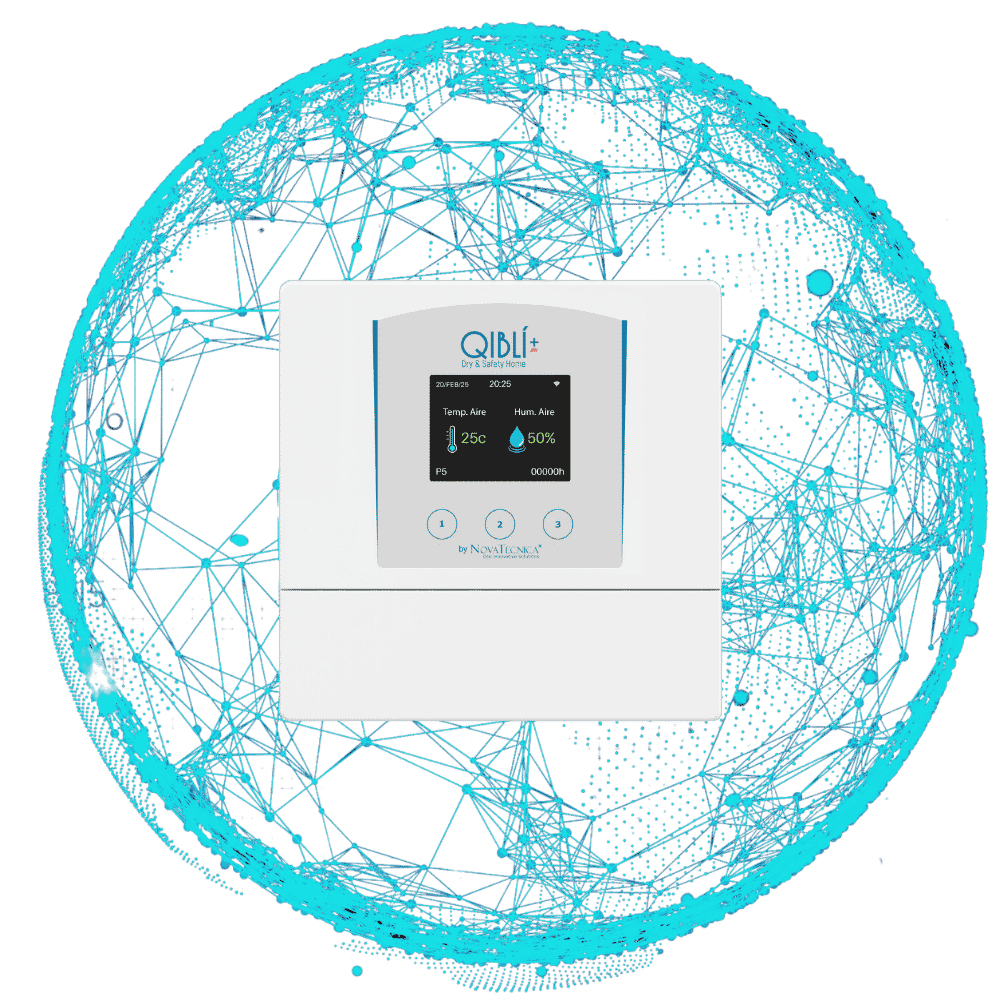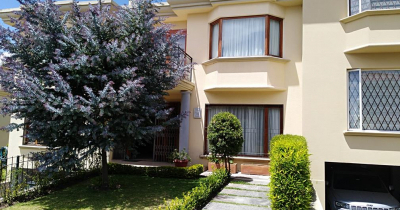
The Canadian Embassy in Quito had a property, home to one of its own officials, dealing with rising damp. After installing Qiblí, the Embassy confirmed the results firsthand and certified them in writing. What makes this case stand out is what they did next: they chose to install more devices in other affected properties, on their own initiative.
The problem: a staff residence with rising damp
The property showed the pattern that's typical of rising damp: persistent damage low on the walls that kept coming back despite repairs. The Embassy brought in NovaTecnica to install Qiblí and, rather than take the results on faith, monitored the outcome directly before deciding on anything further.
What the Embassy certified in writing
Ray Fankhauser, Consul at the Canadian Embassy, certified the results in an official letter. Here's the relevant part, translated from the original Spanish-language certificate:
"I wish to certify that after installing the Qiblí device from NovaTecnica in the property of one of our officials, which had rising damp problems, we were able to confirm its effectiveness. For that reason, we decided to install more devices in other properties affected by this same moisture problem."
Ray Fankhauser, Consul, Canadian Embassy
Why an embassy's word carries more weight than a typical review
A diplomatic mission doesn't approve a contractor the way a homeowner picks one off a search result. Any work done on embassy property usually goes through internal procurement standards, security considerations, and sign-off from staff who have no personal stake in making a vendor look good. That process makes an embassy certification a stronger form of evidence than an online review: someone with an official title put their name on a specific claim, on official letterhead, with the institution's credibility behind it.
The clearest sign of confidence: they installed more
Plenty of testimonials say a product worked. Fewer show a client acting on that result without being asked. The Embassy's decision to expand the treatment to other properties is a stronger form of confirmation than a satisfied comment: it means the results held up well enough over time that they chose to repeat the process on their own, at their own cost, with no incentive to say otherwise.
Here's a quick summary of the case:
| Client | Canadian Embassy in Quito |
| Problem | Rising damp in a staff residence |
| Solution | Qiblí (wireless electroosmosis) |
| Certified by | Ray Fankhauser, Consul |
| Result | Confirmed effectiveness, followed by installation of additional units in other affected properties |
Why this matters even if your case isn't a diplomatic property
A diplomatic property comes with constraints an average homeowner doesn't have to think about: sensitivity around any construction work, strict standards for anything installed, and an institution that has every reason to be conservative before recommending a fix to other properties it manages. That the Embassy moved forward with more installations after seeing the results is a meaningful data point, not just a nice quote.
For most homes, the process looks similar, just simpler. It generally includes:
- An initial diagnosis to confirm it's actually rising damp and not condensation or penetrating water.
- Installing Qiblí, which uses wireless electroosmosis and doesn't require cutting into walls or running cables.
- Periodic moisture monitoring as the walls dry out, using the Q Control sensor.
- A final desalination step to remove the salt that already made it to the surface, guided by NovaTecnica's after-sales team.
What the diagnosis process looked like
Before any device goes in, NovaTecnica's process starts the same way it would for a family home: confirming the problem is actually rising damp, not condensation from poor ventilation or water getting in through a damaged roof or window seal. On an institutional property, that step matters even more, since an embassy isn't going to approve a fix for the wrong problem. Once rising damp was confirmed, the rest followed the same path used on residential properties: install Qiblí, monitor drying progress, and finish with a desalination step to remove any salt that had already reached the surface.
Quito sits at high altitude in a valley with a mix of colonial-era buildings and newer construction, and rising damp shows up across both, especially in properties built before modern damp-proofing standards became routine. An embassy staff residence isn't an unusual case in that sense. It's simply a well-documented example of a problem that appears across the city, evaluated by people with no reason to overstate the result.
Part of a broader pattern, not an isolated result
This case doesn't stand alone. NovaTecnica also holds a certification from Ecuador's National Institute of Cultural Heritage for work at the Cathedral of Quito, and one from the Brazilian Embassy for a similar rising damp problem at its own official residence. Three different institutions, evaluating three different properties, independently confirming that the same underlying technology works. That pattern matters more than any single testimonial, because it rules out the possibility that one result was a coincidence or an unusually easy case.
There's also a reputational cost worth considering. An embassy issuing a written certification about a contractor's work puts its own credibility on the line. If the claim turned out to be false or exaggerated, that reflects poorly on the institution itself, not just the vendor. That's a strong incentive to be accurate rather than generous.
The same warranty behind every Qiblí installation
This case didn't come with special treatment on the warranty side. Qiblí installs with the same lifetime, unlimited warranty on any property, residential or institutional, covering both the electronic device and the dehumidification result. It's the same coverage any homeowner gets installing Qiblí today.
How long results like this usually take
As a general reference, not specific to this case, natural drying after the water rise is stopped takes between 6 and 36 months, depending on the material and site conditions. The Embassy's certification doesn't specify an exact timeframe, but the fact that they had enough confidence to expand the installation points to results appearing within that expected range, likely on the faster end given a residential-scale property.
Frequently asked questions
Does this work the same way in a house as in a diplomatic property?
Yes, and often faster. A typical home has far less wall area to treat than an embassy building or residence.
Can it be installed without construction work on a sensitive property?
Yes. Because it's wireless electroosmosis, there's no cutting, drilling across the wall, or structural work involved, which is part of why institutional clients can approve it in the first place.
Are there other certified cases like this one?
Yes. NovaTecnica has additional certifications from Ecuador's National Institute of Cultural Heritage, the Cathedral of Quito, and the Brazilian Embassy, among other institutional and residential clients.
Why did the Embassy decide to install more devices instead of just keeping the one?
That's not detailed in the certificate, but it's a reasonable signal: an institution that had already confirmed results chose to repeat the same fix elsewhere rather than trying something different.
Why should I trust a certificate over an online review?
A certificate like this one is signed by a named person with an official title, on institutional letterhead, with the organization's credibility attached to the specific claim being made. That's a different level of accountability than an anonymous star rating.
How is Qiblí's warranty different from what a general contractor offers?
Most contractor guarantees cover workmanship for a limited period, often a year or two. Qiblí's lifetime warranty covers both the device and the dehumidification result indefinitely, which is a different level of commitment.
The evidence behind this case
Beyond the quote, NovaTecnica publishes the full certificate, not just an excerpt, on its website, alongside the ones from the Cathedral of Quito and the Brazilian Embassy. That's a level of transparency that's uncommon in this industry: most damp-treatment companies show generic testimonials with no name or title attached, while these certificates include a signature, an institutional title, and a date, all verifiable.
If a foreign embassy trusted Qiblí enough to expand its use after seeing the results, that's a solid signal for what it can do in your own home. NovaTecnica has been treating rising damp for over a decade, with more than 3,000 installations across Ecuador and beyond, backed by a lifetime warranty on both the device and the result. See how Qiblí works or check the complete rising damp guide to confirm your own diagnosis.