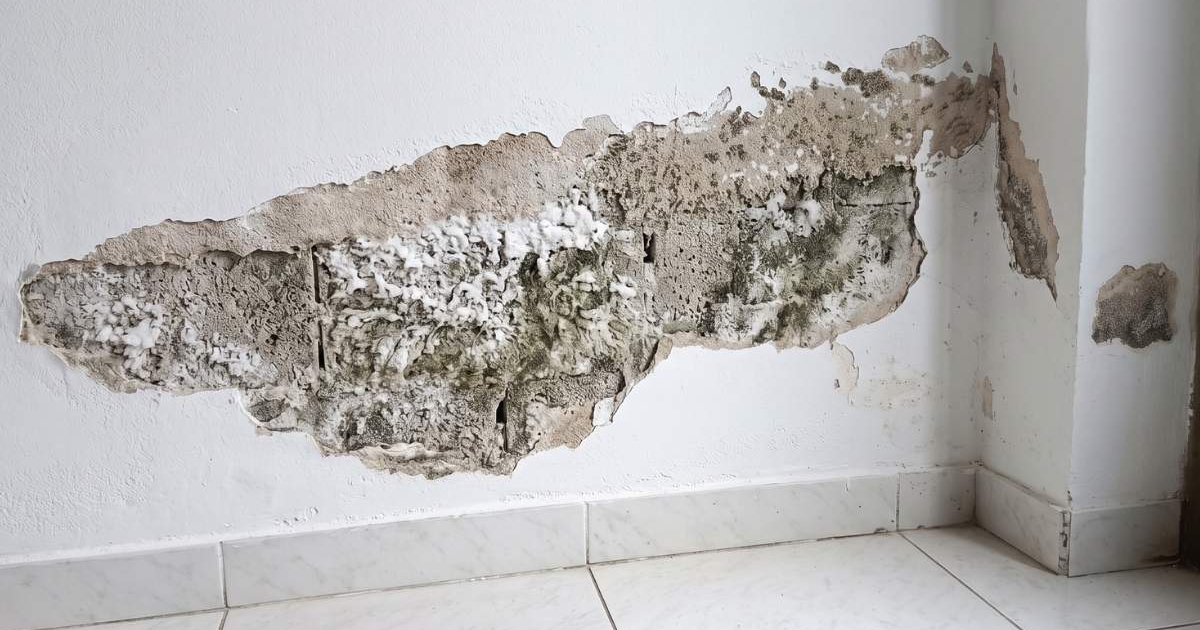
If you repaint the same wall and a few months later the paint bubbles, cracks, or falls off again, the problem was never the paint or the plaster. It's in the foundation. It's rising damp: groundwater climbing by electrical attraction that carries salt along the way and ends up breaking any finish from the inside.
Why the paint was never the issue
This surprises a lot of people, but the process that pulls water up doesn't happen in the wall you can see. It happens at the foundation. Water carries a positive electrical charge, and building materials carry a negative one. That attraction between opposite charges is what pushes water upward through the pores of the material, and it doesn't stop because you changed the paint color or redid the plaster. As long as that attraction exists at the base, the water keeps climbing, no matter what you put on top of it.
Put another way: the paint, the plaster, whatever finish you choose, all of that lives on the surface. The process we're talking about happens feet below, at the point of contact between the building and the damp ground. No matter how many layers you add on top, you're not touching the cause.
The real reason the paint breaks: salt
As the water climbs, it doesn't travel alone. It carries dissolved mineral salts from the soil. Those salts build up inside the wall, sometimes for years, without showing on the surface. The problem shows up once they finally reach it: the water evaporates there, but the salt stays behind, and when it recrystallizes it can grow up to 300 times its original size, depending on the type of salt in the soil.
That growth is what breaks the paint from the inside. It's not that the paint was low quality or badly applied. It's that underneath that layer there are salt crystals pushing outward, literally cracking the material from within its own structure. That's why it doesn't matter how many coats you apply: if the underlying cause is still there, the result will be the same, month after month.
This is where a lot of people, and a lot of contractors, get confused, because at first glance salt and mold can look similar. This table helps tell them apart:
| Characteristic | Salt (efflorescence) | Mold or mildew |
| Color | White or light gray | Green, black, or dark brown |
| Texture | Dry crust or powder that crumbles when touched | Fuzzy appearance, sometimes sticky |
| Where it shows up | Low on the wall, near the floor | Corners, ceilings, poorly ventilated areas |
| Smell | Practically none | Musty or damp earth smell |
| If you clean it and it comes back | Comes back because water keeps rising from the foundation | Comes back if ventilation or humidity doesn't improve |
| What NOT to do | Apply muriatic acid or burn the wall | Use generic mold treatments without fixing ventilation |
If you're not sure, a simple test helps. Touch the crust carefully:
- If it crumbles into white powder between your fingers, it's salt.
- If it's sticky, dark, or fuzzy, it's more likely mold.
Two common mistakes that make it worse
People trying to fix this on their own usually fall into one of two traps:
- Mistaking it for mold: not knowing it's salt, a lot of contractors assume it's mold and end up applying muriatic acid or even burning the wall trying to kill it. Not only does that do nothing, the problem stays exactly the same, or worse, because now there's also chemical damage to deal with.
- Covering the wall: tile, wood paneling, anything that hides the stain. It backfires. Sealing the surface doesn't stop the water, it just pushes it to find another way out, climbing even higher and carrying more salt with it.
What actually works instead
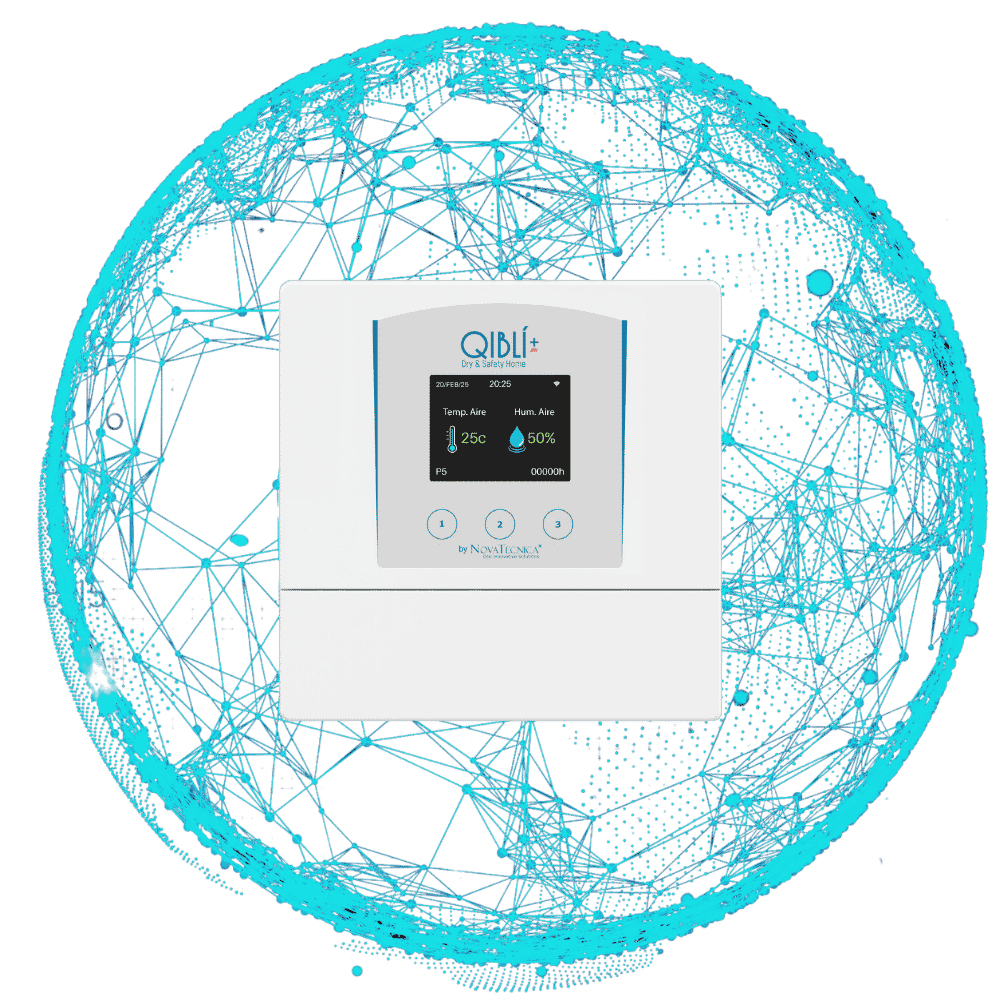
Stopping the water at its source is the only step that changes anything. That's where a treatment like Qiblí comes in, which uses wireless electroosmosis: it generates a low-intensity electromagnetic field that interacts with water molecules to slow their climb, without the cables or wall-mounted electrodes a traditional wired system needs.
But stopping the rise isn't the finish line. After that comes a step we at NovaTecnica call desalination, a restoration process focused specifically on removing the salt that already made it to the surface, without using chemicals that have nothing to do with the actual problem. Our after-sales team walks the contractor through that process directly, so the final finish doesn't get ruined by the same mistakes all over again. In practice, that's the difference between solving the problem at the root and just buying yourself a little more time before it comes back.
If you're also seeing efflorescence, that white, powdery crust that crumbles when you touch it, that's another sign pointing to the same cause. You can check the complete rising damp guide or the article comparing rising damp, condensation, and penetrating damp to confirm the diagnosis.
Frequently asked questions
Does waterproof paint work instead of regular paint?
Not for good. It can help the look for a while, but if water keeps rising from the foundation, salt keeps arriving and breaking the finish, no matter which paint you use.
Why did my contractor say it was mold?
It's a common mistake, not bad faith. A lot of contractors have never seen up close how salt behaves on a wall with rising damp, and at a glance it can look like mold. The table above helps confirm it without needing a technician.
Does tiling or paneling fix it in the meantime?
No, it makes it worse. Sealing the wall doesn't stop the water, it just pushes it to find another way out, climbing higher than it would have without the covering.
How long does it take for this problem to show up after a building is constructed?
It varies a lot depending on the material and how close the building is to groundwater. It can take just a few years in buildings with very porous materials like adobe, or much longer in buildings with dense concrete and a good damp proof course.
Should I wait until the paint stops peeling before treating the moisture?
No. The correct order is the opposite: stop the water rise first, and only then does it make sense to restore the paint and do the desalination work. Restoring the finish before treating the cause just repeats the same mistake that caused the problem.
Can it be fixed without breaking into the walls?
Yes. Wireless electroosmosis devices, Qiblí included, don't need cutting or injection.
If this sounds like what's happening at your place, it's not bad paint or bad luck. It's a problem that starts at the foundation and only gets solved by stopping the water there. NovaTecnica has been doing exactly that for over a decade, with more than 3,000 installations across Ecuador and beyond, and Qiblí is the only device in the world that also lets you monitor your wall moisture in real time thanks to the Q Control sensor. See how Qiblí works or check the complete rising damp guide to confirm your diagnosis.